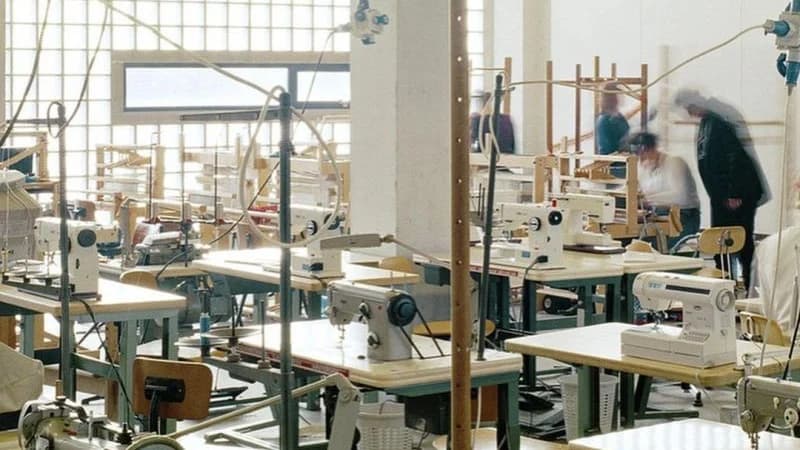
The number of UK clothing manufacturers has gone up, not down. There were 3,305 on the register in 2015 and 3,755 by 2022. Makers also outlive the rest of the fashion trade, surviving a median of 2.13 years against 1.83 years for retail and 1.45 for wholesale.
And yet when a UK maker does fail, it is the most likely of the three to go through a formal insolvency: 4.10% of dissolved manufacturers, against 3.86% for retail and 2.20% for wholesale.
That combination is unusual. The businesses that live longest are not normally the ones that take creditors down with them when they go. Our new report works through why.
The squeeze starts before anything is sold
Transform Trade surveyed and interviewed 48 UK tier one clothing manufacturers between March and October 2025. What they describe is a set of purchasing terms most industries would not accept.
90% of makers bear the full cost of samples during onboarding and development, carrying weekly sampling exposure of roughly £1,300 to £4,000. Development does not secure the work either. 48% said a brand had taken a style they had developed and placed the production order with another factory, and 46% described the practice as common or very common.
The maker funds bringing the product into being, then competes to keep the order it created.
Below cost, and paid late
40% said they had accepted orders priced below the cost of production, taking the work to keep a line running or a relationship alive. On cut, make and trim margins there is almost no buffer to absorb that.
Payment has slowed at the same time. Standard terms drifted from 30 days in 2019 to 45 days by 2024. Fewer than half of payments now settle within 30 days and more than a quarter arrive after 60. A business on single digit margins is financing its customers while it waits.
Committing capacity blind
75% said brands do not provide forecasts or seasonal buying plans clear enough to help them decide on workforce, machines and investment.
That figure is worth stating precisely, because it is often overstated. It does not mean three quarters receive nothing. Better Buying’s 2025 index finds 84.6% of suppliers globally get some forward visibility, though only around a third receive a forecast 120 days or more ahead. The problem is not absence. It is that what arrives is too late, too vague or too unreliable to commit capacity or capital against.
This is the inventory decision gap seen from the other side of the order. Retailers commit stock before they know demand. Makers commit capacity before they know the order.
A cost base moving the wrong way
Policy is adding cost on top. Employer National Insurance rose from 13.8% to 15% in April 2025 and the threshold at which it starts fell sharply, adding roughly £800 a year to the cost of an employee on £25,000 before reliefs. The National Living Wage reached £12.71 an hour in April 2026, in a trade where cutting, sewing, finishing and pressing are still done by hand. Make UK estimates the 2026 business rates reform will cost manufacturers around £940 million a year more.
Each of those lands directly on a margin that was already single digit.
Where the UK actually competes
Not on labour cost, and it does not try to. Minimum order quantities run roughly 50 to 300 pieces a style against offshore norms of 1,000 to 5,000. Lead times are shorter. Origin compliant nearshore garments can enter key markets at 0% duty where many lines otherwise carry around 12%.
The reshoring story is real but conditional. UKFT’s 2025 study of eight UK retailers with combined turnover of £26.1 billion found UK sourcing used mainly for knitwear, jersey, printing and low volume test and react work, with only around a third of brands considering longer term UK production. John Smedley reopened Lea Mills in Derbyshire for third party manufacturing after a 40 year gap, backed by more than £3 million of machinery. In the same period Burberry cut around 1,700 roles, including the night shift at its Castleford factory. Attention is not yet volume.
What it means
Britain has not forgotten how to make clothes. What it has is a set of terms and a lack of visibility that make doing so at a profit extraordinarily hard. The failure is not a failure of skill.
Terms are a question for the industry and for policy. Visibility is where Coord works. The advantage the UK sells, speed and low minimum orders, is worth most to the maker who can see demand coming.
Read the full report