
Pricing Intelligence
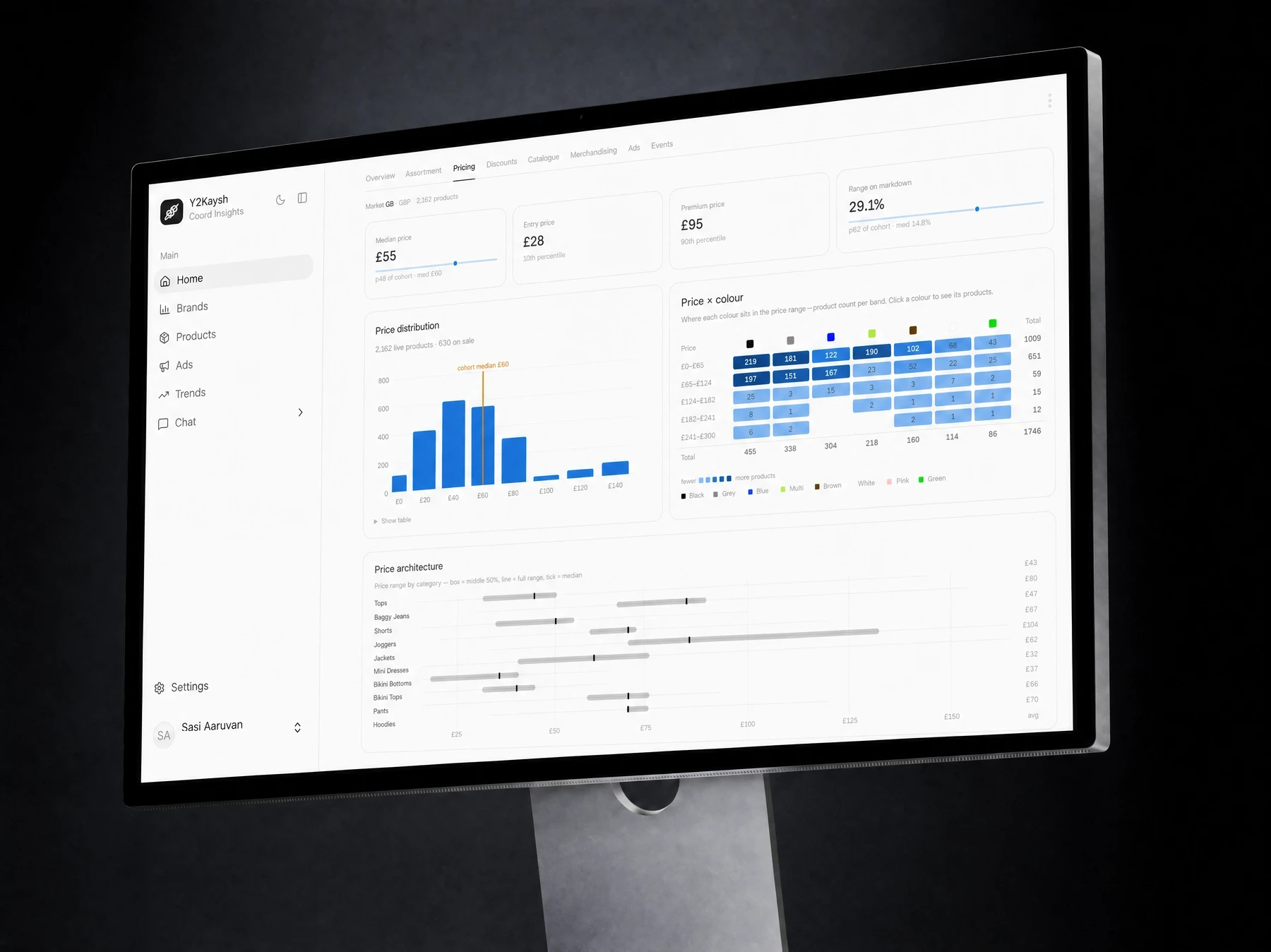
Every price, every size, every market you sell into, and what it means for yours. Coord tells you which sizes were left when they did it, how far the cut goes before it stops working, and whether it is worth answering at all. That reading rests on 345 million price and stock checks, each one held at size and colour rather than averaged into a single figure for the garment.
ONE GARMENT IS NEVER ONE PRICE.
Priced by size, colour and market
The same jacket sits at four prices across three markets, and the black is still full price while the ecru has been cut twice. Coord holds every one of them separately, in the currency the shopper is shown, so a comparison is against the variant your customer is actually looking at rather than an average that describes nothing on sale anywhere. Any market you sell into can be watched; the UK, France and the US are running now.

HOW DEEP IT WENT, AND HOW LONG IT HELD
The shape of a markdown, not the sticker on it.
Thirty percent that lasted a weekend and thirty percent that has run for five weeks are different signals entirely. One is a promotion, the other is a problem. Coord records the depth, the duration and what came off the price next, so you can read which it was.
A BROKEN SIZE RUN IS A SALES FIGURE
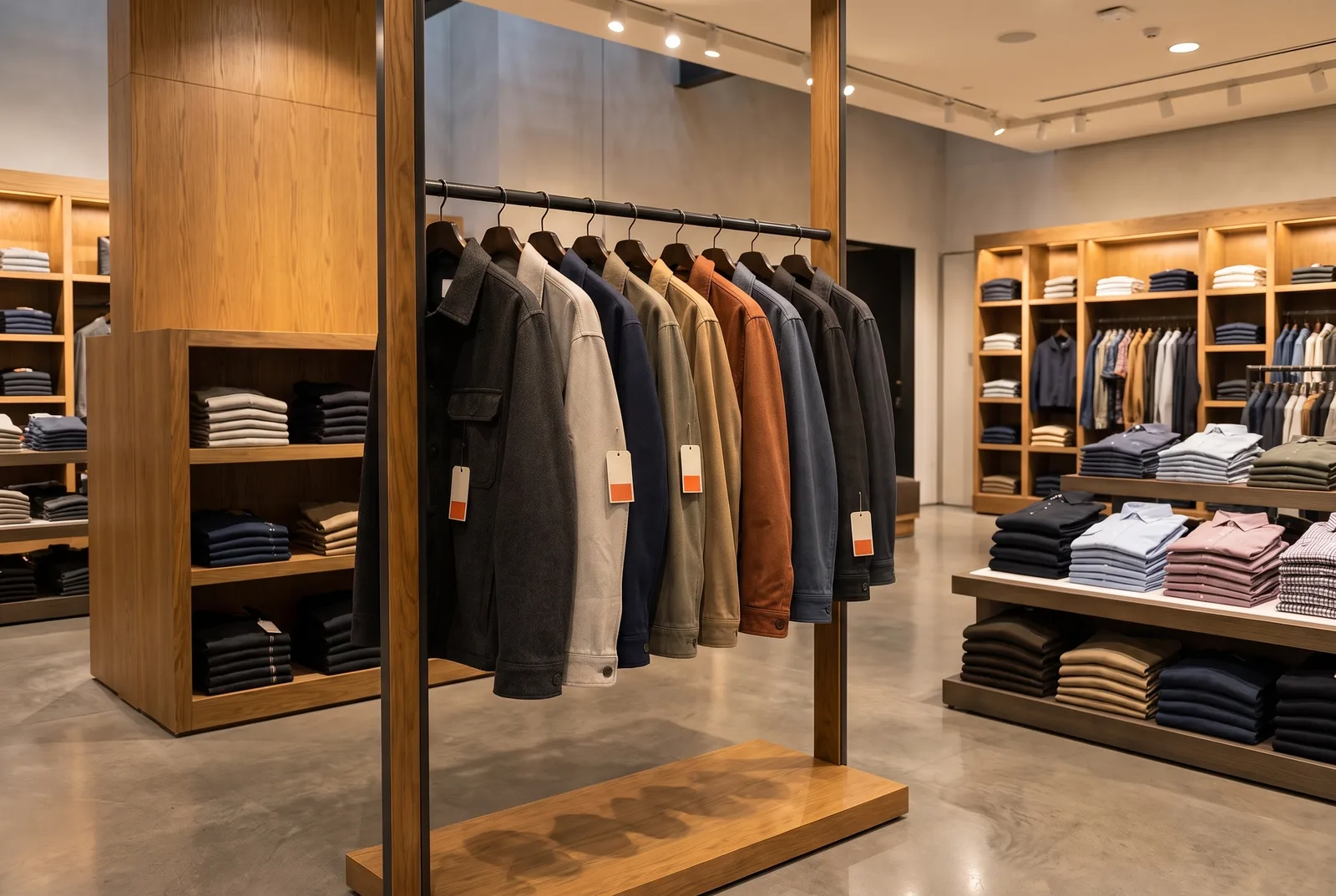
What sold out tells you more than what is still listed.
Nobody publishes sell through, but everybody publishes stock. When a rival's mid sizes vanish and the extremes sit there at full price, that line performed, and their next markdown is unlikely to touch it. Coord watches stock state at variant level and reads the pattern back.
SAME GARMENT, DIFFERENT NAME
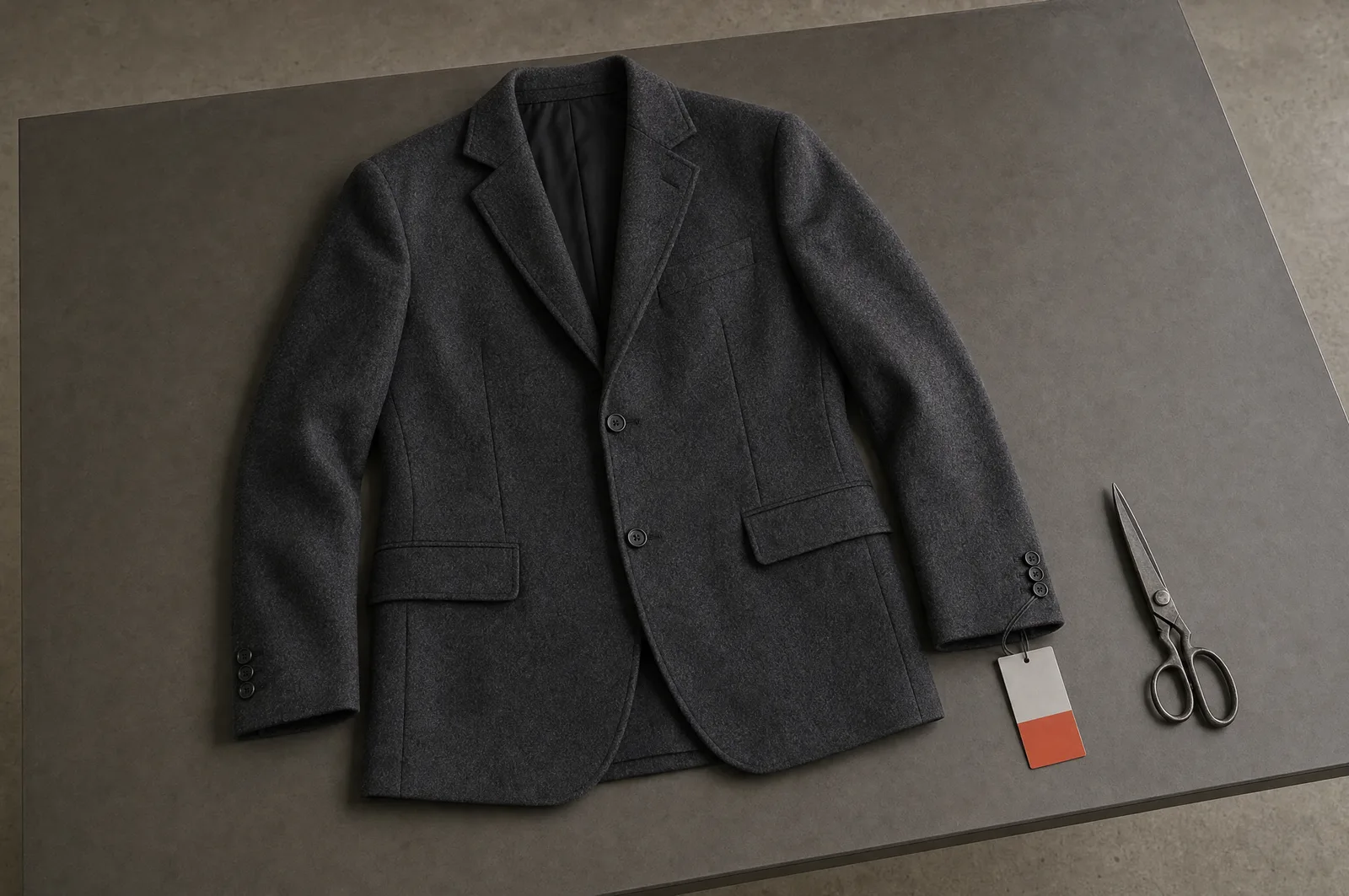
Comparable is the hard part; the arithmetic is easy.
Their ribbed knit is your fine gauge crew, listed under another name with another photograph and no shared identifier anywhere. Coord matches on the garment itself rather than the title, shows you why it made each call, and lets you correct it once so it stays corrected.
WHEN THEY WILL GO ON SALE, AND BY HOW MUCH
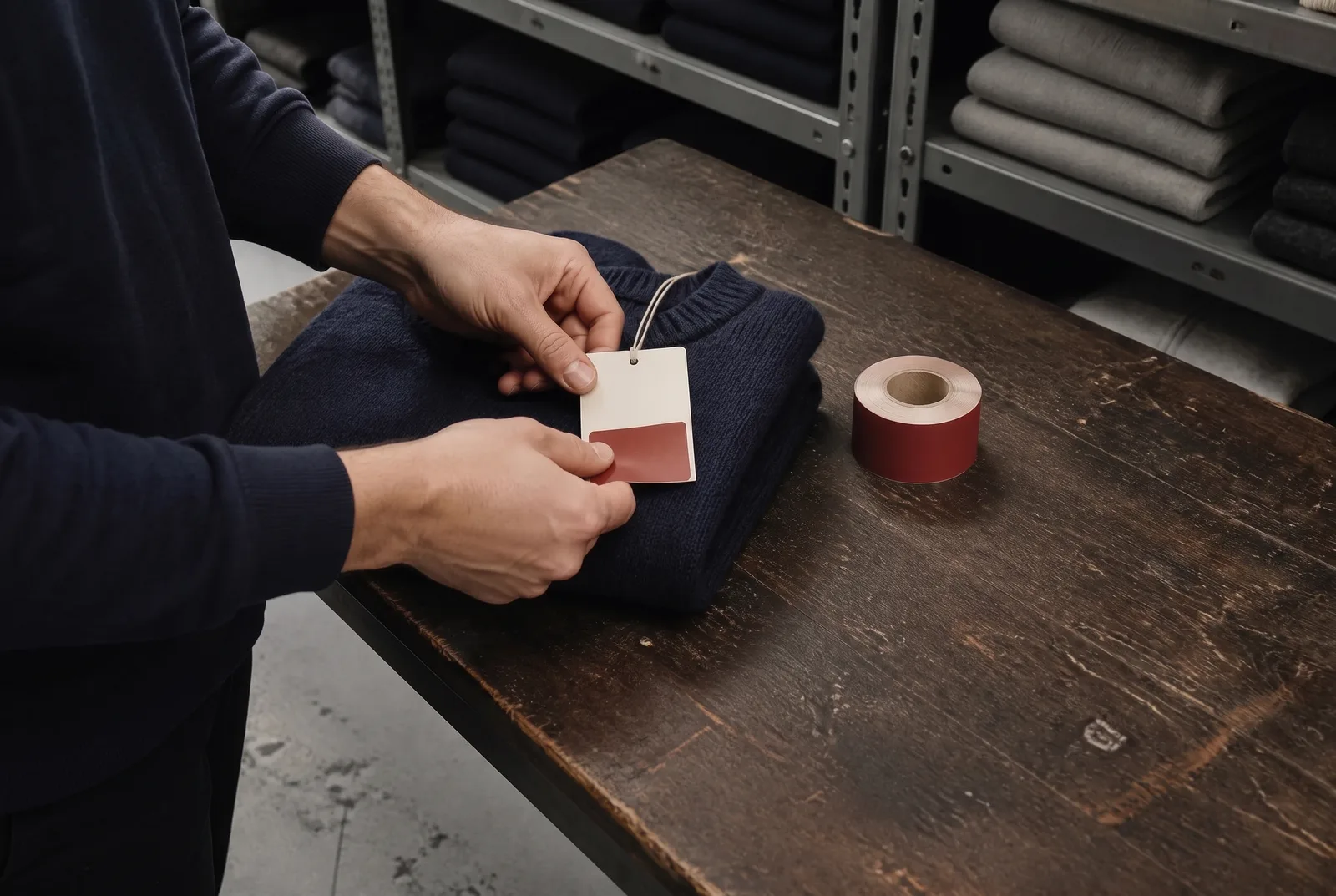
Repricing has a rhythm once you have watched it long enough.
Most retailers discount to a pattern: the same weeks, the same depths, the same categories first. Coord learns the rhythm from what it has watched them actually do, so the question stops being whether they will cut and becomes whether you need to move first.

HOLD YOUR PRICE WHERE IT COSTS YOU NOTHING
Most competitor cuts do not deserve an answer.
A rival cutting a line you do not carry, in a size you have sold out of, in a market you do not ship to, is not a threat. Knowing which cuts matter is what stops a competitor's clearance turning into your discount.
A price is only worth knowing if it is the same garment.
Two retailers can sell the same coat under different names, in different sizes, in different currencies, and never share an identifier. Coord resolves that first and prices second, because a fast number against the wrong garment is worse than no number at all.
Like for like
Prices are compared between matched garments, not between search results. Every match is visible, and one you disagree with can be corrected.
Variant level
Size, colour and market are held separately, in the listed currency, as the shopper sees it. Nothing is averaged into a single figure for a garment.
Evidence
Every price carries the page it was read from and the moment it was read. A number in a brief can be followed back to the listing it came from.
Stock
Availability is recorded alongside price, so a cut on a line that had already sold through is not mistaken for a cut that mattered.
Your prices
What you sell for is yours. Your prices are never shared with another customer, pooled into a benchmark, or used to train a model.
See where your prices actually sit.
A live walkthrough against your own range: what your competitive set is charging today, and which of their cuts are worth answering.